The Carmel Supply Hose: A Saturday Morning Story
A homeowner in Somerset called us on a Saturday around 10 a.m. She had started a load of towels, gone to a kids soccer game, and came back to water seeping out from under the laundry room door. The braided supply hose on the hot water side had ruptured at the crimp. By the time we arrived 47 minutes later, roughly 180 gallons had flowed across the laminate flooring, under the wall into the adjacent half bath, and down through a recessed light into the finished basement ceiling.
This is the part most people miss. A washing machine flood is rarely a one room problem. Water follows gravity and framing channels. We pulled moisture readings in seven separate rooms that morning. Five of them were wet. Our water extraction crew ran two truck mount units for about three hours, then set 14 air movers and four commercial dehumidifiers. Total dry time was four days. Insurance covered the claim minus her $1,000 deductible, and the final invoice ran just under $6,200 including pad replacement and drywall cuts in the basement.
One detail from that job worth sharing. The recessed light in the basement ceiling acted like a funnel. When the homeowner first walked in, she did not even realize the basement was wet because the light fixture had captured most of the drip and was holding it like a bowl. We pulled the trim ring and about a quart of water came out at once. That is why we always inspect the floor directly below a washer flood, even when the homeowner swears the basement is dry.
What We Look For in the First 30 Minutes
When our techs arrive at a washer flood in Somerset, the inspection follows a tight sequence. We are not just sucking up water. We are mapping where it went so nothing gets missed and quietly grows mold three weeks later. Here is the short version of what happens before any equipment comes off the truck:
- Shut off and verify the supply valves are fully closed, then photograph the failed component for the claim file.
- Use thermal imaging and pinless moisture meters to trace water migration into walls, subfloor, and ceiling cavities below.
- Classify the loss under IICRC S500 (Category 1 clean water in most washer cases, Category 2 if it sat over 24 hours or backed up through the drain).
- Map drying zones and calculate dehumidifier grain depression load before placing equipment.
That last item trips up a lot of DIY attempts. A dehumidifier rated for a 500 square foot bedroom will not pull a saturated laundry room and adjacent hallway back to dry standard in any reasonable timeframe. We size equipment based on cubic footage, class of water loss, and the materials involved. Hardwood floors need a slower, more controlled dry than carpet. Get the math wrong and you either over dry and crack flooring or under dry and grow mold.
The Greenwood Slow Leak Nobody Saw
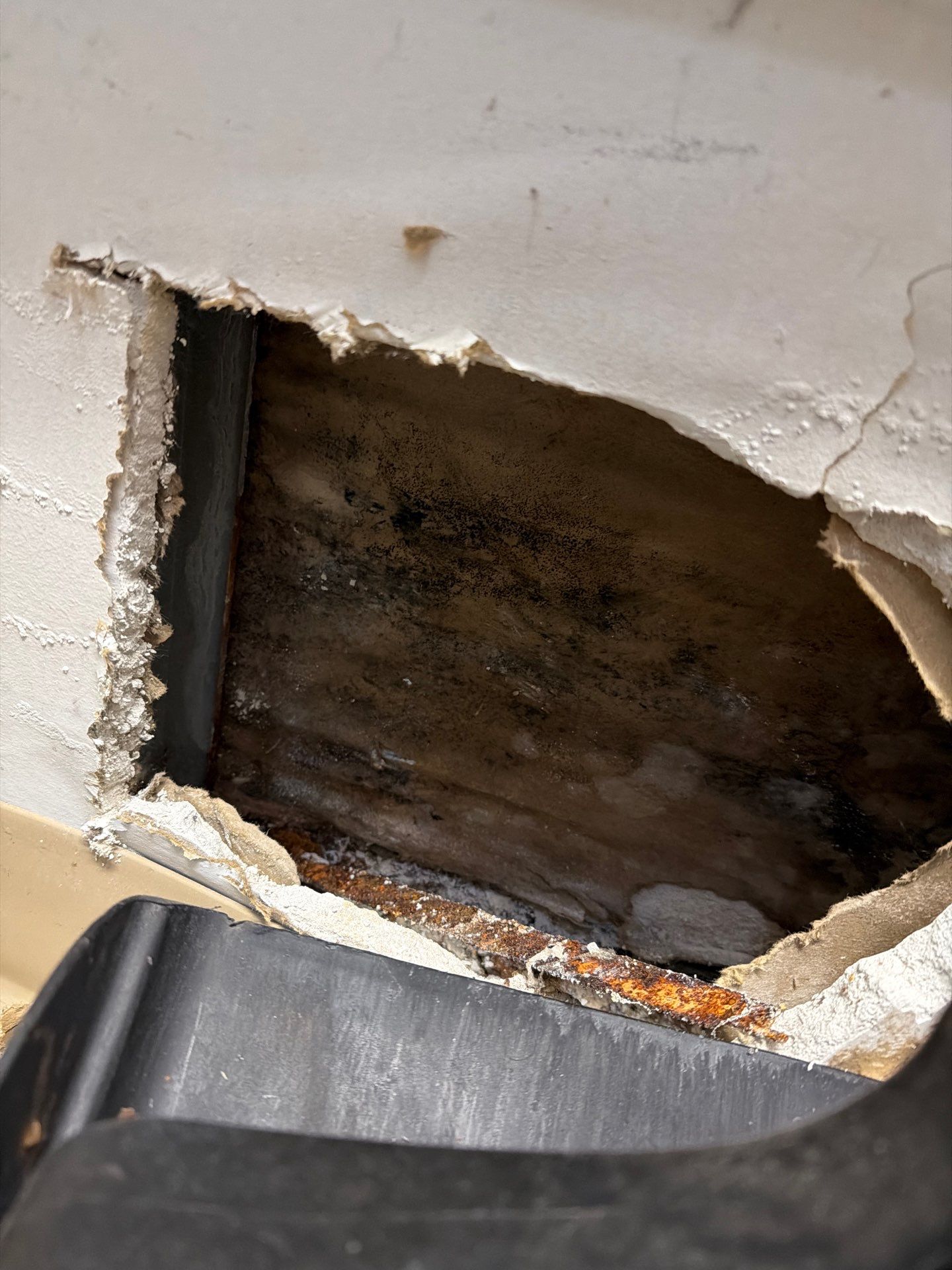
One last story, because it is the most common scenario we walk into. A Somerset homeowner noticed her laundry room baseboard looked slightly warped. No flood, no puddle, just warped trim. We pulled the washer out and found the cold water supply had been weeping behind the connection for what we estimated at two to three months. The drywall behind the machine was black with mold from floor to about 14 inches up. Subfloor was spongy. This job turned into a $9,400 project because the slow leak gave mold time to colonize.
If you ever pull laundry out of the dryer and smell something musty, or your trim is cupping, do not wait. Get someone in to scan the wall cavity. We do free moisture inspections in Somerset and the surrounding area, and if we cannot help, we will tell you directly. Sometimes it is just a tightening job for a plumber. Sometimes it is the start of something much bigger, similar to what we cover in our burst pipe water damage guide. Somerset Water Restoration has been pulling washers out from walls in this market long enough to know which signs matter and which ones can wait until Monday.
The Fishers Drain Pump Failure
Another job worth telling. A young family in Somerset had a front loader that the drain pump quit on mid cycle. The machine kept filling because the sensor thought it was still draining. Soapy gray water poured out of the door gasket for close to 40 minutes before the husband heard the noise from upstairs. Because this water had run through dirty laundry, we classified it Category 2 under IICRC standards. That changes the protocol. Carpet pad got removed and disposed of, the carpet itself was treated with an EPA registered antimicrobial, and we ran HEPA air scrubbers in addition to the air movers.
Their adjuster initially pushed back on the pad replacement cost. We sent over our moisture documentation, the IICRC category classification, and photos of the wicking pattern up the baseboards. Claim was approved at full scope, $4,850. The lesson here for any Somerset homeowner: documentation wins claims. If you try to dry it yourself with a shop vac and a box fan, you lose both the documentation trail and probably the claim.
What Drives the Repair Bill Up or Down
People always ask what a washer flood actually costs. Across the jobs we have run in central Indiana, simple single room incidents caught within two hours run $1,800 to $3,500. Multi room or multi floor events like the Carmel story above land between $5,000 and $9,000. If the water sat overnight and we are dealing with swollen subfloor, cabinet base damage, or visible mold, you can see $10,000 to $18,000 once reconstruction is included. Our pricing on the front end matches what you would see in our water damage restoration cost breakdown, and we bill insurance directly so you are not floating the full amount.
Flooring choice also matters more than people expect. Laminate is the worst performer we see in laundry rooms. Once water hits the seams, the core swells and there is no drying it back flat. We have to remove and replace the affected area, and matching a discontinued plank often means redoing the whole room. Tile holds up best, engineered hardwood is in the middle, and vinyl plank done with a quality underlayment can sometimes be saved if we get there fast enough.