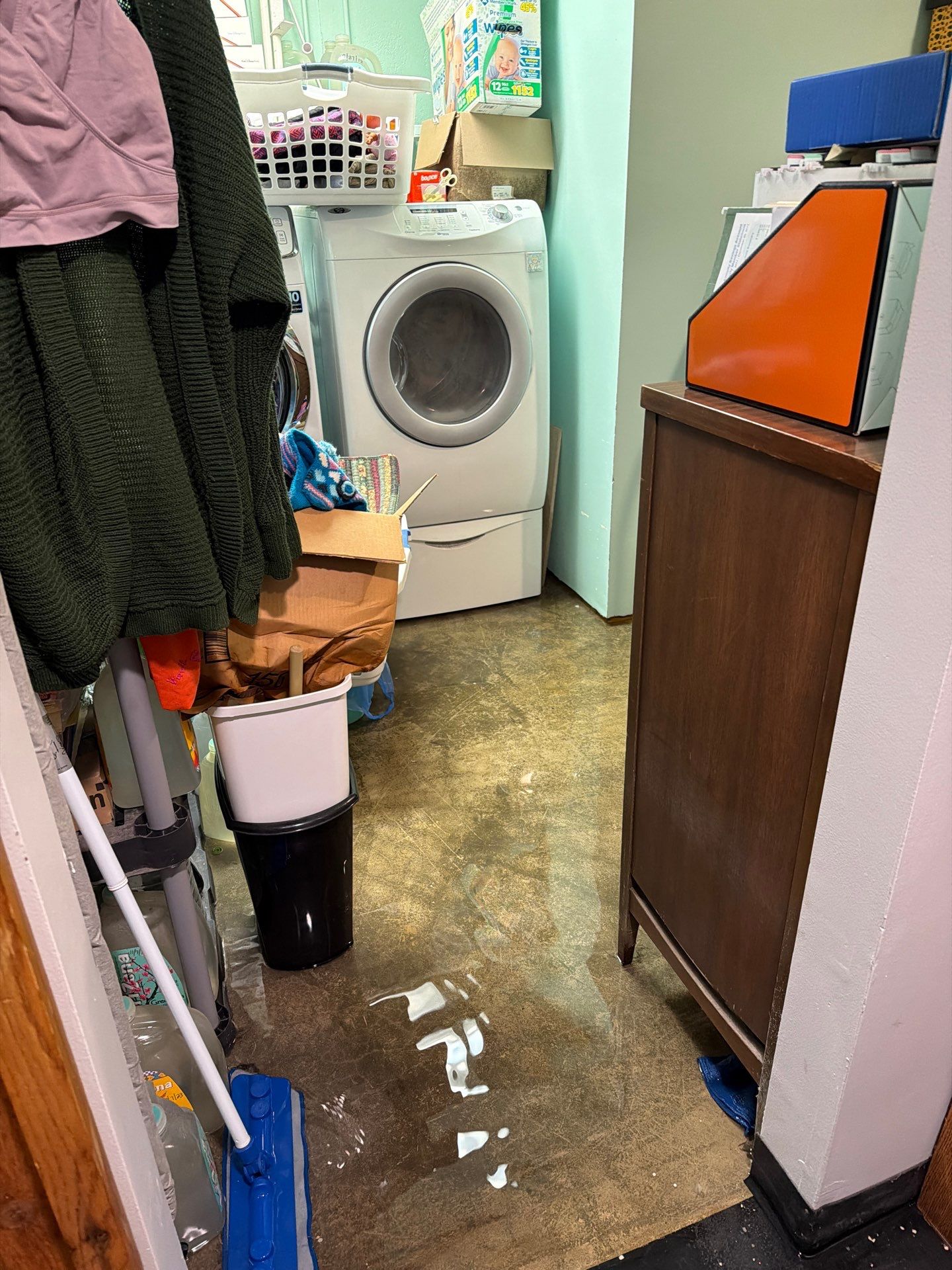
The Tuesday Night Basement Backup
Back to the homeowner above. When our crew arrived in Somerset at 11:30 PM, the water was three quarters of an inch deep across roughly 600 square feet. The source was a main line clog about 40 feet out from the foundation, which we confirmed with the plumber she'd called earlier. Our first move was not extraction. It was containment. We set plastic barriers at the stairwell, killed power to the affected outlets, and got everyone into N95s and nitrile gloves. Sewage is not just water with a smell. It carries E. coli, hepatitis A, rotavirus, and parasitic cysts that survive surface drying.
Extraction took about two hours with a truck-mounted unit pulling roughly 180 gallons. The laminate flooring, the bottom four inches of drywall, the carpet pad, and her kids' stuffed animals along the wall all came out. That part is hard for people. She asked us three times if we could save the rug her grandmother made. We could not, and we told her so. Porous materials touched by Category 3 water are not salvageable under IICRC protocol, no matter how sentimental.
We came back the next morning with three dehumidifiers and six air movers, monitored the cavity moisture for four days, and reframed the bottom plate sections that had wicked beyond the cut line. Total job came in at $5,600. Her insurance covered all but the deductible because she called within the first hour and we had photos timestamped before any demolition started. That timing matters more than most homeowners realize.
The Westfield Crawl Space Job
A different call, different season. A homeowner just outside Somerset noticed a sulfur smell creeping into his living room over about ten days. He assumed it was a dead mouse. When he opened the crawl space hatch, he found two inches of standing sewage from a cracked cast iron stack that had been leaking slowly for who knows how long. By the time we got there, mold colonies were already visible on the floor joists, which is why we often handle these alongside our water damage restoration protocols rather than as a standalone sewage job.
That job ran $8,400 and took six days. His insurance covered $6,900 of it because the failure was sudden enough to qualify under his policy, even though the leak had been slow. The lesson he learned the hard way: a smell that does not go away in 48 hours is never just a dead mouse. If you suspect sewage in a crawl space or below a slab, do not crawl in to check. Hydrogen sulfide at high concentrations can knock you out in seconds.
The Carmel Insurance Story
One Somerset area homeowner almost lost her claim because she did the wrong thing first. Her toilet overflowed for about 20 minutes while she was at work, and her teenage son tried to clean it up with towels and a mop before she got home. By the time she called us, the contaminated water had wicked under the vanity and into the subfloor. Her adjuster initially denied part of the claim because the documentation was incomplete. We rebuilt the timeline using moisture mapping, photographed every affected material, and submitted a scope that matched standard insurance language. The claim was approved at $11,200.
The takeaway: do not clean sewage yourself before documentation exists. Photograph everything, call your insurer, then call a certified restoration company. If you want a deeper walkthrough of the cleanup sequence, our breakdown of what to do during a basement flooding event covers the first-hour decisions in detail, and many of the same rules apply to sewage backups specifically.
What We Actually Do On Site
Every sewage job we run in Somerset follows the same backbone, even when the stories look different:
- Source confirmation and shutoff, usually in coordination with a licensed plumber
- Containment and PPE setup before any extraction begins
- Bulk water extraction, then removal of unsalvageable porous materials
- Antimicrobial application using EPA-registered hospital-grade products
- Structural drying with air movers and dehumidifiers, monitored daily until moisture readings hit dry standard
- Post-remediation verification, including surface sampling when the client or insurer requests it
Most residential sewage jobs in Somerset run between $2,800 and $7,500, with the average sitting near $4,200. Crawl space and multi-room jobs can push past $10,000. Commercial buildings, especially restaurants and medical offices, often go higher because of code requirements around food prep and patient care zones.
What You Should Not Do
From the field, here are the four mistakes we see most often in Somerset homes: running HVAC during active contamination, which spreads pathogens through the duct system; using household bleach on porous materials, which masks the smell without killing what is underneath; saving carpet that touched sewage to wash later, which never works; and waiting more than 24 hours to call, which is when mold growth typically begins on wet organic materials. Every one of those mistakes makes the final bill bigger and the timeline longer. When in doubt, step back, document, and let a certified Somerset Water Restoration technician make the call on what stays and what goes.
When It Is Commercial
A Somerset dental office called us on a Saturday because their break room sink had backed up overnight and contaminated the adjacent supply closet. They had patients scheduled Monday morning. We mobilized a four-person crew, completed extraction and antimicrobial treatment by Sunday afternoon, and had air quality verification done before opening. That job is the kind of work we handle through our commercial sewage cleanup division, where downtime costs more than the cleanup itself and the documentation has to satisfy both insurance and health department requirements.
The Odor That Will Not Leave
One Somerset family called us three weeks after a different company had "finished" their basement sewage cleanup. The visible damage was gone, but every time their furnace kicked on, the smell came back. We pulled an HVAC return cover and found contaminated insulation the previous crew had left in place because it looked dry. Sewage odor is not a surface problem. It bonds to porous materials at the molecular level, and if any contaminated substrate stays in the building, the smell will keep returning for months. We removed the insulation, fogged the duct runs with a hydroxyl treatment, and the smell was gone in 48 hours. Total cost to fix someone else's incomplete job was $3,100, which the original company eventually reimbursed after we provided documentation.